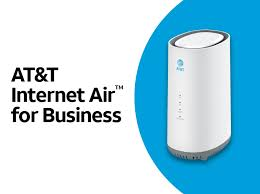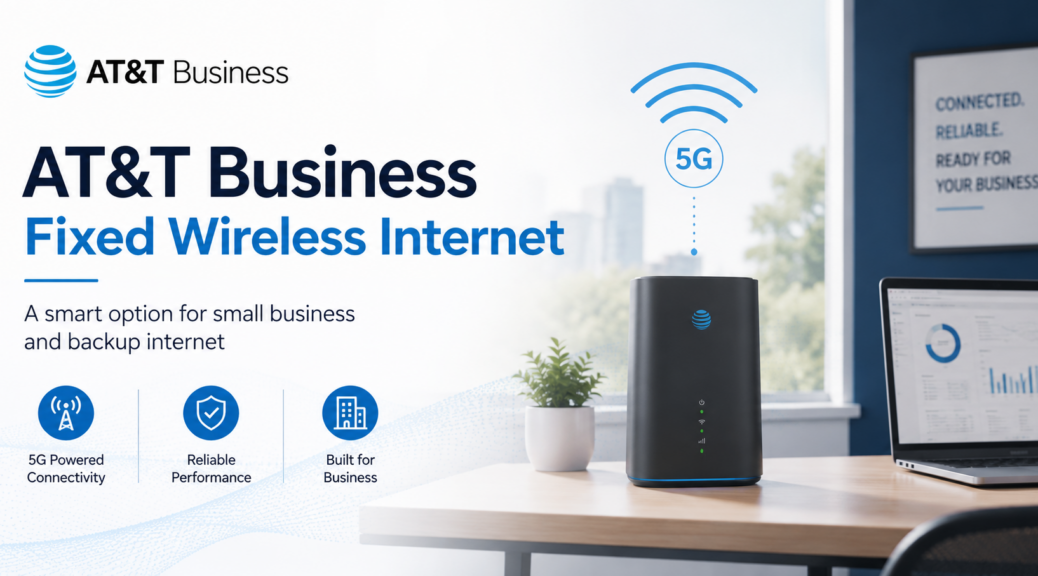
AT&T Business Fixed Wireless Internet can make sense when a business needs internet service without waiting on a traditional wired installation.
It is not perfect for every location. It is not always better than fiber or cable. But for the right business, it can be a strong option for fast setup, backup internet, temporary locations, and offices where wired service is slow, expensive, or unavailable.
The smart move is not to ask, “Is fixed wireless good?”
The better question is: Does fixed wireless fit this business location, workload, and budget?
What Is AT&T Business Fixed Wireless Internet?
AT&T Business Fixed Wireless Internet is business internet delivered through the wireless network instead of a traditional wired connection like fiber, cable, or copper.
In simple terms, the business gets an internet connection using wireless signal at a fixed location. That makes it different from a mobile hotspot that moves around with a driver, technician, or employee.
Fixed wireless is usually meant to serve a business address. A hotspot is usually meant for mobile use.
Quick take: AT&T Business Fixed Wireless Internet is best when a business needs internet at one location and wants a faster setup than a traditional wired install.
When AT&T Business Fixed Wireless Internet Makes Sense
Business fixed wireless can be useful in several real-world situations.
- Small offices that need internet without a long wired installation delay.
- Temporary locations where fiber or cable does not make sense.
- Construction sites and job sites that need internet before the permanent connection is ready.
- Backup internet for businesses that cannot afford to be completely offline.
- Remote business locations where wired options are limited.
- Retail or service locations that need internet for basic business tools.
- Amazon DSP offices or dispatch locations that need a practical internet option for daily operations.
The biggest advantage is speed of deployment. Wired internet can take time. Fixed wireless may be easier to install when the location qualifies and the signal is strong enough.
When Fixed Wireless May Not Be the Right Fit
Fixed wireless is not magic. It still depends on signal, network conditions, the building, equipment placement, and how the business uses the internet.
It may not be the best choice if the business has:
- Weak wireless signal at the address.
- A large office with many users online at the same time.
- Heavy video uploads or large file transfers all day.
- Security camera systems constantly uploading to the cloud.
- A need for the most stable wired connection possible.
- Affordable fiber already available at the location.
If fiber is available, priced right, and reliable, fiber is usually the stronger primary internet option. Fixed wireless may still make sense as a backup.
Fixed Wireless vs. Mobile Hotspot
A lot of business owners confuse fixed wireless internet with a mobile hotspot. They are not the same thing.
Mobile Hotspot
A mobile hotspot is better for people who need internet while moving around.
- Drivers
- Field technicians
- Traveling employees
- Short-term mobile internet use
Fixed Wireless
Fixed wireless is better when the business needs internet at one address.
- Small offices
- Dispatch offices
- Backup internet
- Temporary business locations
- Locations waiting on wired internet
If the internet needs to move with a person, look at a hotspot or business data plan. If the internet needs to stay at one business location, fixed wireless may be the cleaner fit.
Related: AT&T Business DataConnect Plans
Fixed Wireless vs. Fiber or Cable Internet
Fiber and cable are usually better for long-term primary internet when they are available, affordable, and reliable.
Fixed wireless becomes more attractive when wired service is delayed, too expensive, not available, or not dependable enough.
Fiber or Cable Usually Wins For:
- Large offices
- Heavy daily internet use
- High upload needs
- Long-term primary internet
- Businesses that need the most stable wired connection available
Fixed Wireless Can Win For:
- Fast setup
- Backup internet
- Temporary locations
- Locations with poor wired options
- Small teams with basic internet needs
The right answer depends on the address and the business use case.
AT&T vs. Verizon vs. T-Mobile for Business Fixed Wireless
AT&T, Verizon, and T-Mobile all compete in the business wireless internet space. The best option is not the same everywhere.
Coverage can change by address, building type, nearby towers, network traffic, and equipment placement. One carrier may be stronger in one part of town and weaker a few miles away.
That is why a business should not pick fixed wireless only because of a national coverage map or a low advertised price.
The better move is to check:
- The exact business address.
- How many people will use the connection.
- What software or systems will run on it.
- Whether it is primary internet or backup internet.
- Whether the business already has fiber, cable, or another wired option.
Related: 5G Fixed Wireless for Business: AT&T vs Verizon vs T-Mobile
Why Amazon DSP Owners Should Pay Attention
Amazon DSP owners often deal with multiple wireless and internet needs at the same time.
- Driver phones
- Dispatch office internet
- Tablets or hotspots
- Backup internet
- Device upgrades
- New lines for new drivers
For an Amazon DSP, fixed wireless may make sense at a dispatch location if the office needs internet quickly or needs a backup connection.
It may not be the right fit if the location has heavy camera uploads, a large staff, or a stronger wired internet option already available.
Related: Amazon DSP Wireless Solutions Guide
What to Check Before Ordering Business Fixed Wireless
Before ordering AT&T Business Fixed Wireless Internet, get the basics right first.
- Business address: Fixed wireless is location-specific.
- Current internet provider: Compare it against what the business already has.
- Monthly cost: Know what the business is paying now.
- Primary or backup use: Backup internet has a different purpose than primary internet.
- Number of users: More users can change the recommendation.
- Business systems: Phone systems, payment terminals, cameras, dispatch tools, and cloud software matter.
- Installation timeline: Fixed wireless may help when wired internet takes too long.
- Signal quality: The service only works well if the location has the right wireless conditions.
A cheap internet plan that does not support the business is not a deal. It is a problem waiting to happen.
How Priority Data Can Affect Business Wireless Internet
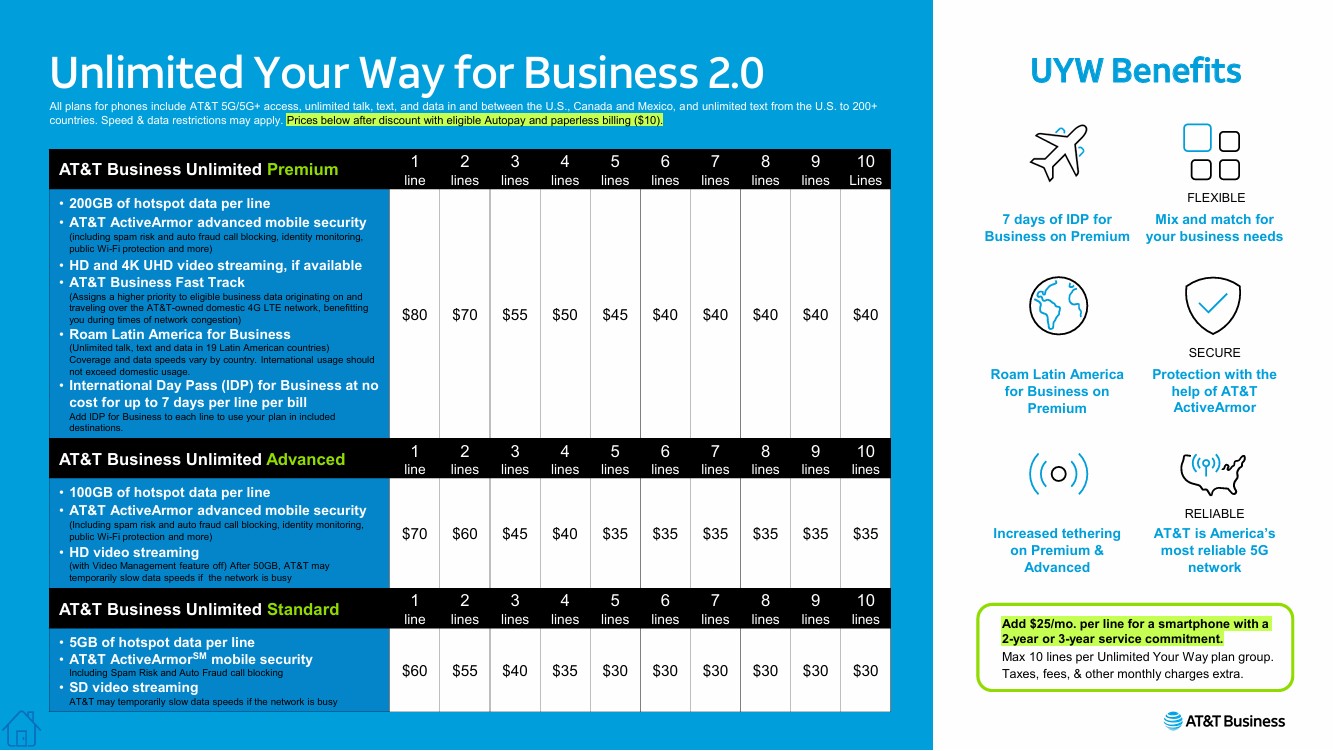
Business owners should also understand priority data when comparing wireless internet, hotspot plans, and business wireless plans.
Priority data can affect how service performs when the network is busy. This matters for businesses using wireless service for internet access, field work, dispatch operations, or backup connectivity.
Related: What Priority Data Means on Business Wireless Lines
Bottom Line
AT&T Business Fixed Wireless Internet can be a smart option for small businesses, backup internet, temporary locations, and offices that need internet without waiting on a wired installation.
It is not automatically better than fiber or cable. It is not automatically worse either.
The right answer depends on the business address, signal strength, number of users, current internet service, and what the business needs the connection to support.
For many small businesses, the best setup may be wired internet as the main connection and fixed wireless as backup. For others, fixed wireless may be enough as the primary connection.
Related: AT&T Business Plan Calculator and Promotions Details
Need Help Deciding If Fixed Wireless Makes Sense?
Send me the business address, current internet provider, current monthly cost, and what the internet needs to support.
I can help you figure out whether AT&T Business Fixed Wireless Internet makes sense, or whether fiber, cable, hotspot, or another wireless internet option is the better move.