Business Fixed Wireless Internet: AT&T vs Verizon vs T-Mobile
Fast setup is the reason to care. Business fixed wireless internet can connect a small office, retail location, remote site, or temporary setup without waiting on a wired install. The tradeoff is simple: reliability depends on the exact address, local network load, and gateway placement inside the building.
Quick verdict
If fiber is available at the address, fiber usually wins for consistency. Fixed wireless is often strongest when you need fast install, a backup circuit, or internet for a hard-to-wire location.
Side-by-side: business fixed wireless internet comparison
AT&T Internet Air for Business
Standard / Premium$30 Standard / $70 Premium
Without eligible wireless plan:
$65 Standard / $105 Premium
Premium includes 250GB of AT&T Turbo for Business.
Verizon 5G Business Internet
100 / 200 / 400$39/mo with qualifying smartphone bundle on the 100 Mbps plan
T-Mobile 5G Business Internet
Grow / AdvancedBusiness Advanced: starting at $50
This is a working comparison snapshot. Always check the exact business address before you decide.
AT&T Internet Air for Business
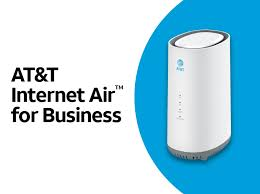
- Current plan display: Standard and Premium.
- Pricing shift: AT&T now shows lower pricing when the business has an eligible wireless plan.
- No speed caps, no data caps, and no overage fees are part of the current offer language.
- Premium includes 250GB of AT&T Turbo for Business before network management may matter more during congestion.
- Important: this is fixed wireless service, not mobile service. It must be used at the qualified business address.
- Best fit: backup internet, temporary locations, remote sites, and places where wired install is slow or unavailable.
- Related: for a simpler breakdown of how network treatment works, read priority data on business wireless lines.
Verizon 5G Business Internet

- Defined tiers: Verizon still leans into up to 100 Mbps, 200 Mbps, and 400 Mbps plans.
- Starting point: Verizon shows plans starting at $69 per month.
- Bundle push: Verizon markets a $30 monthly savings when paired with a qualifying business smartphone plan, bringing the 100 Mbps plan to $39 in that setup.
- Switching pitch: Verizon advertises up to $1,500 to help cover switching costs.
- Guarantee messaging: Verizon highlights a 10-year price guarantee for eligible new customers in select areas and a 30-day satisfaction guarantee.
T-Mobile 5G Business Internet

- Current business internet pages: Small Business Grow starts at $30 and Business Advanced starts at $50.
- Hardware angle: T-Mobile highlights Wi-Fi 7 gateway hardware.
- Advanced plan angle: Business Advanced adds stronger network controls, guest Wi-Fi options, and a Static IP upgrade option.
- Heavy-use note: T-Mobile says some business internet offers may see lower speeds during congestion and further reduction after very heavy monthly usage.
- Location rule: service is for use at the location provided at activation.
Reliability comparison: what actually matters
Most business fixed wireless internet comparisons miss the real issue. The biggest factor is the exact address, then building layout, then local network load.
- Check the exact business address before you commit.
- Test during your real busy hours, not just early morning.
- Place the gateway correctly. Window areas and higher placement often help.
- Think about failover if your point-of-sale or phones cannot go down.
Retail businesses: POS, cameras, guest Wi-Fi
- POS: consistency matters more than flashy peak speed.
- Cameras: watch upload behavior and congestion impact.
- Guest Wi-Fi: keep it separate from business-critical traffic where possible.
- Temporary locations: this is where fixed wireless often shines.
Fixed wireless vs fiber
If fiber is available, fiber usually wins for consistency, upload performance, and long-term stability. Fixed wireless usually makes more sense when you need:
- fast installation,
- a backup circuit,
- a remote or temporary site,
- or internet where wired options are limited.
FAQ
- Which carrier has the best business fixed wireless internet?
No carrier wins every address. Business fixed wireless internet performance depends heavily on the exact location, building conditions, and local congestion. - Is AT&T business fixed wireless internet good for small offices?
Yes, especially for backup internet, temporary offices, and places where wired install is difficult or slow. - Is Verizon or T-Mobile better for business fixed wireless?
It depends on the address. Verizon is stronger for businesses that want defined tiers. T-Mobile is stronger for businesses that like simple setup and SMB gateway features. - Is fixed wireless better than fiber for business?
Usually no. Fiber is usually better when available. Fixed wireless wins on speed of deployment and flexibility.